
Transcript
Announcer:
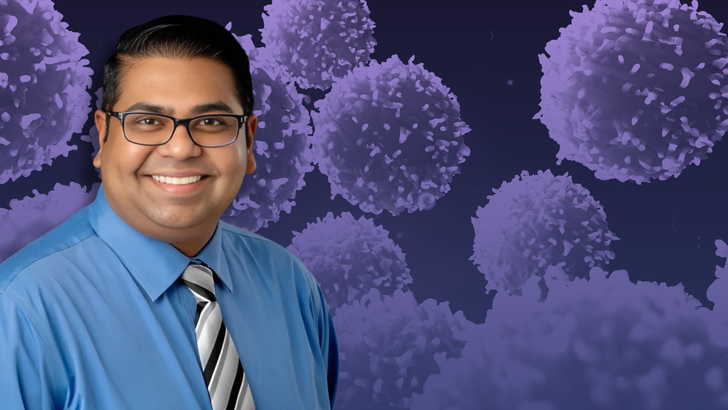
This is Project Oncology on ReachMD. On this episode, we’ll hear from Dr. Yogindra Persuad, a physician in the Department of Hematology at St. Jude Children’s Research Hospital in Memphis, Tennessee. He’ll be discussing the future of sickle cell management.
Here’s Dr. Persuad now.
Dr. Persuad:
I think more research needs to go into the disease process, all together, and more research should be, emphasized on, disease-modifying therapy. While I do think that, the space will continue to evolve concerning the transformative therapies, that is very expensive, and so a lot of insurance carriers may not want to approve it. Also, not a lot of centers may carry these, offer these therapies. So, what will happen is we will have a, a large population who may still rely on, um, your disease-modifying therapies, like hydroxyurea. And so, what I think we need to do is we need to approach these these therapies in a multimodal fashion. So one is disease-modifying therapy when the, when the disease is mild enough and could be managed, , and then the other is transformative therapies, improving that such that the side effects are not as severe for, our sickle cell patients. I do think that putting a lot of emphasis, because the, the natural evolution is the transformative therapies will evolve, but I think, partner with pharmaceutical companies to try to evolve the, um, the oral approaches, so the approaches similar to hydroxyurea, , I think that is going to benefit patients and can reach patients, more, , here in the United States and even other, other places where resources may be limited and we may not be able to, say, offer a, “curative option.”
I think we really should put some emphasis on these oral agents and probably improve the rigor of our studies. So a lot of studies are geared towards pain, but we know that pain is only one facet of the disease. There are many other facets, such as eye disease and heart disease. Kidney problems are a major factor for patients, and so some of these other things should be studied. In men, priapism is a big problem, and it remains understudied within the sickle cell population. So when we gear our studies, I think we should gear them around some of these other symptomologies than just pain. Not to say that we shouldn’t study pain. I think it is important to study, but there are many other symptoms that I think we need to look at as well.
Announcer:
That was Dr. Yogindra Persuad talking about the future of sickle cell management. To access this and other episodes in our series, visit Project Oncology on ReachMD.com, where you can Be Part of the Knowledge. Thanks for listening!

